Twelve months, twelve stones, and what each one actually is
The modern birthstone list was standardised by the American National Retail Jewelers’ Association in 1912, revised in 1952, and last extended in 2002 when tanzanite was added to December. That list, and only that list, is how this shop assigns a stone to a month.
Each month below gives you the mineralogy, the treatment reality for that material, and the wear expectation. Nothing else — no properties, no meanings, no attributions.
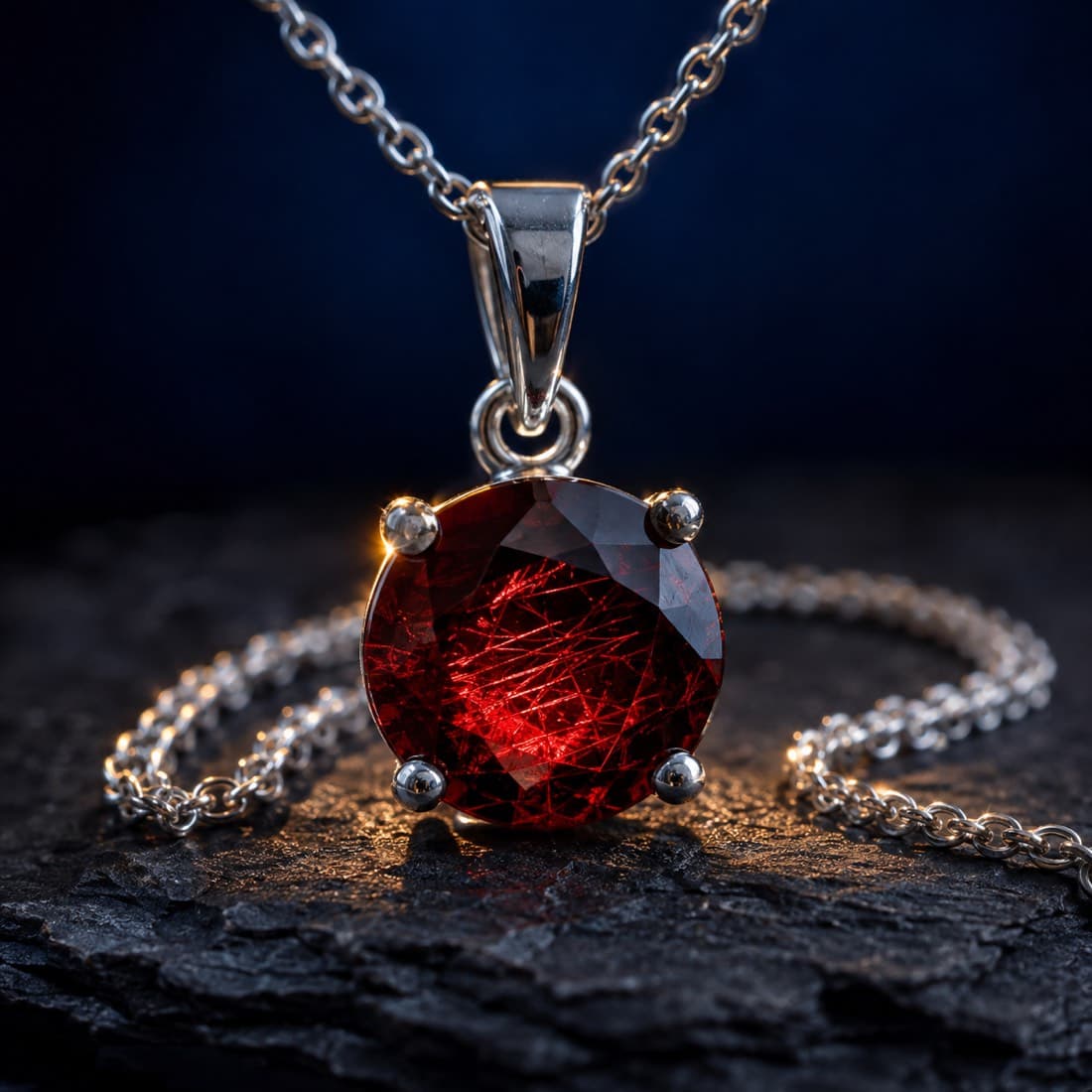
January
Garnet — a mineral group, not a single species
- Mineralogy
- Garnet is a group of silicate minerals sharing one crystal structure and varying in composition. The dark red stones sold as January's birthstone are usually almandine or pyrope. Mohs 7 to 7.5, no cleavage, refractive index 1.72 to 1.89 depending on species.
- What the trade does to it
- Red garnet is one of the few coloured stones that reaches the counter untreated as a matter of routine. Every garnet on this site is declared untreated. If that ever changes, the piece will say so.
- Wearing it
- At Mohs 7 to 7.5 garnet sits just below quartz-scratching hardness. Occasional wear; it will scuff if it is knocked against harder stones.
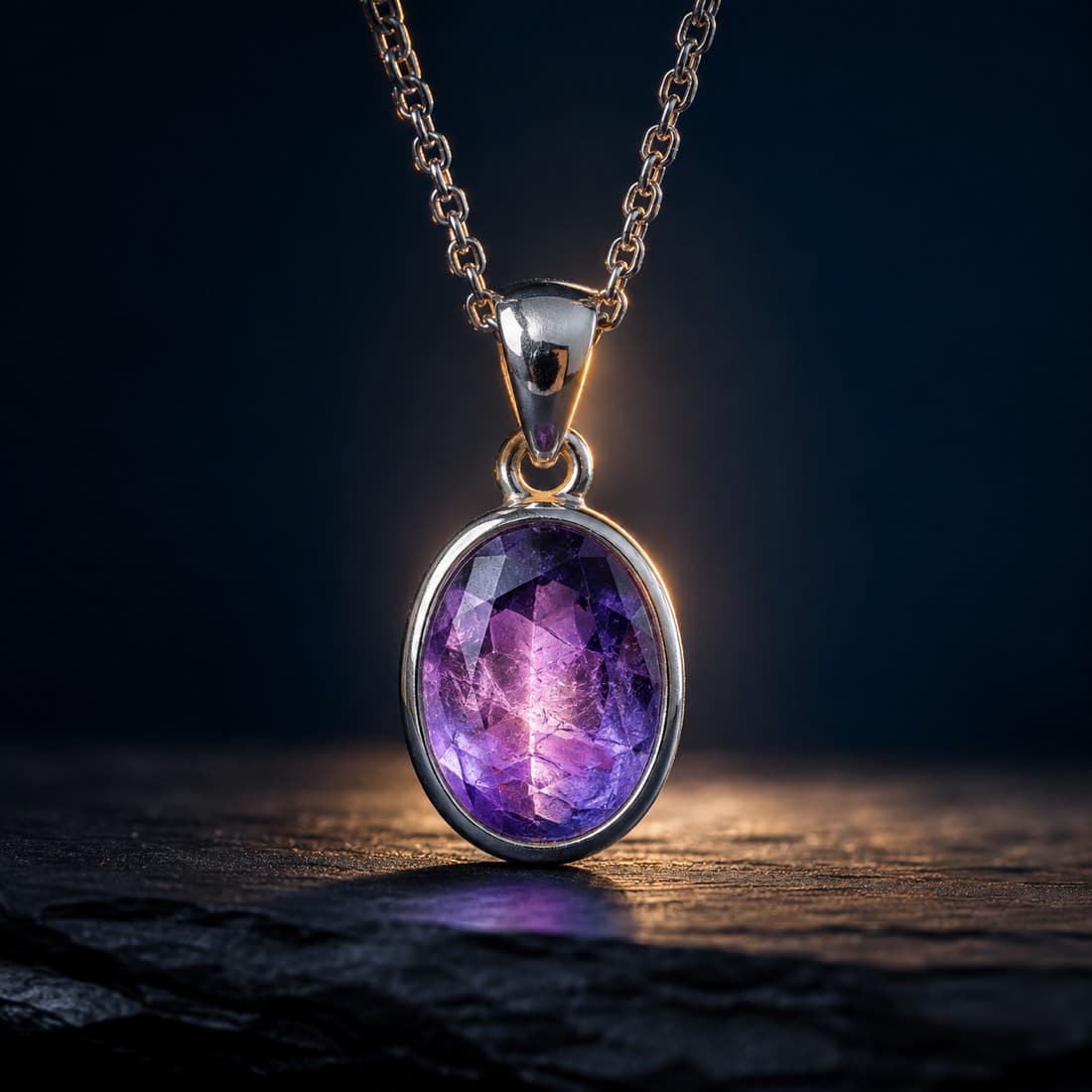
February
Amethyst — the purple variety of quartz
- Mineralogy
- Amethyst is crystalline quartz, silicon dioxide, coloured by iron impurities and natural irradiation within the earth. Mohs 7. It occurs in geodes in Brazil, Uruguay and Zambia, sometimes as crystals over a metre across.
- What the trade does to it
- Gentle heating is routine and is used to even out colour zoning. Heating amethyst harder turns it yellow — which is where most commercial citrine comes from. Every amethyst here is declared heated.
- Wearing it
- Mohs 7. Occasional wear. Prolonged strong sunlight can fade the colour.
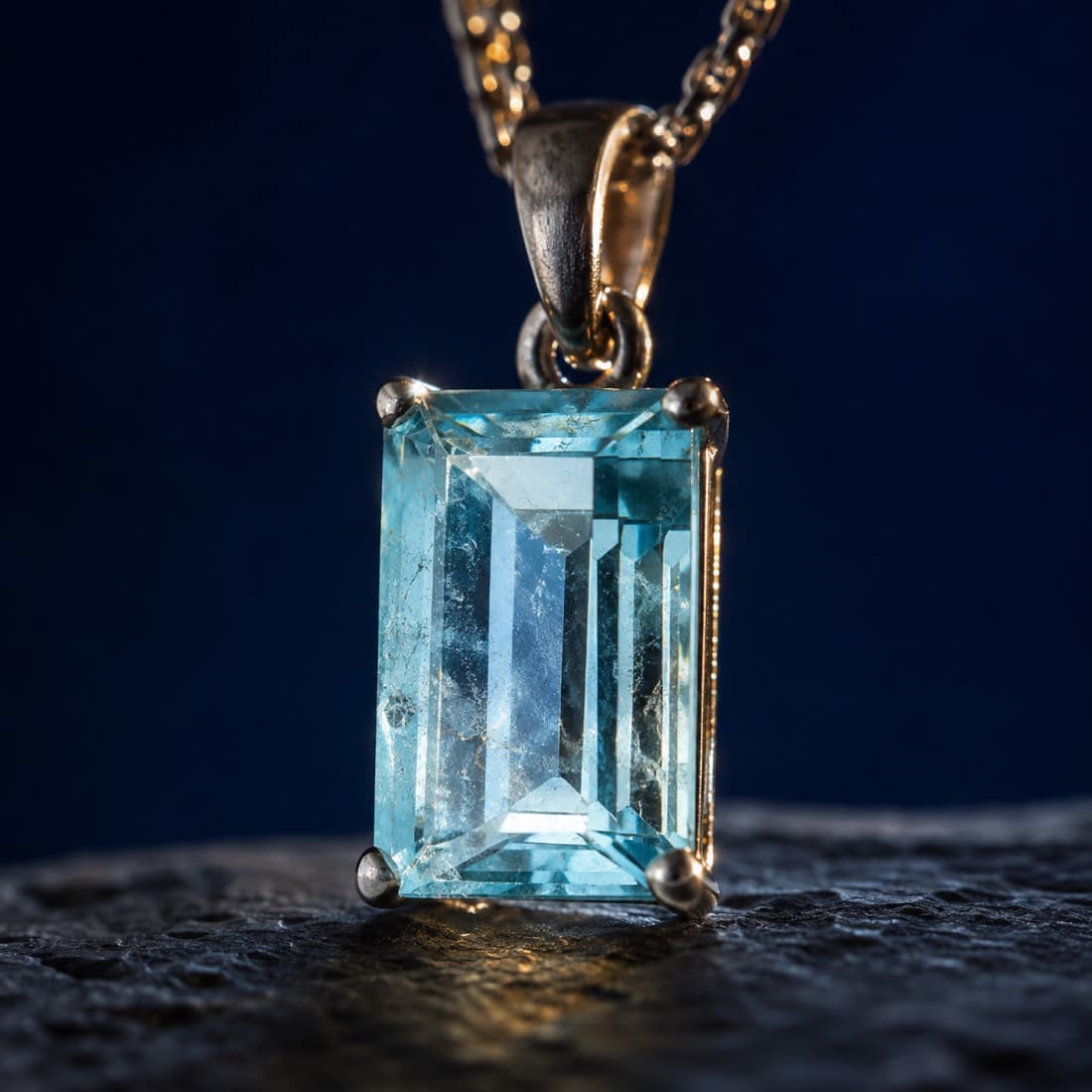
March
Aquamarine — blue beryl, emerald's cleaner sibling
- Mineralogy
- Aquamarine is the blue to blue-green variety of beryl, beryllium aluminium silicate, coloured by iron. Mohs 7.5 to 8. Unlike emerald, which is the same mineral family, aquamarine typically grows with very few inclusions.
- What the trade does to it
- Most aquamarine on the market has been heated to around 400°C to remove a yellow-green component and leave a cleaner blue. The change is stable and permanent. Every aquamarine here is declared heated.
- Wearing it
- Mohs 7.5 to 8, but beryl has one direction of imperfect cleavage. Occasional wear; avoid sharp knocks.
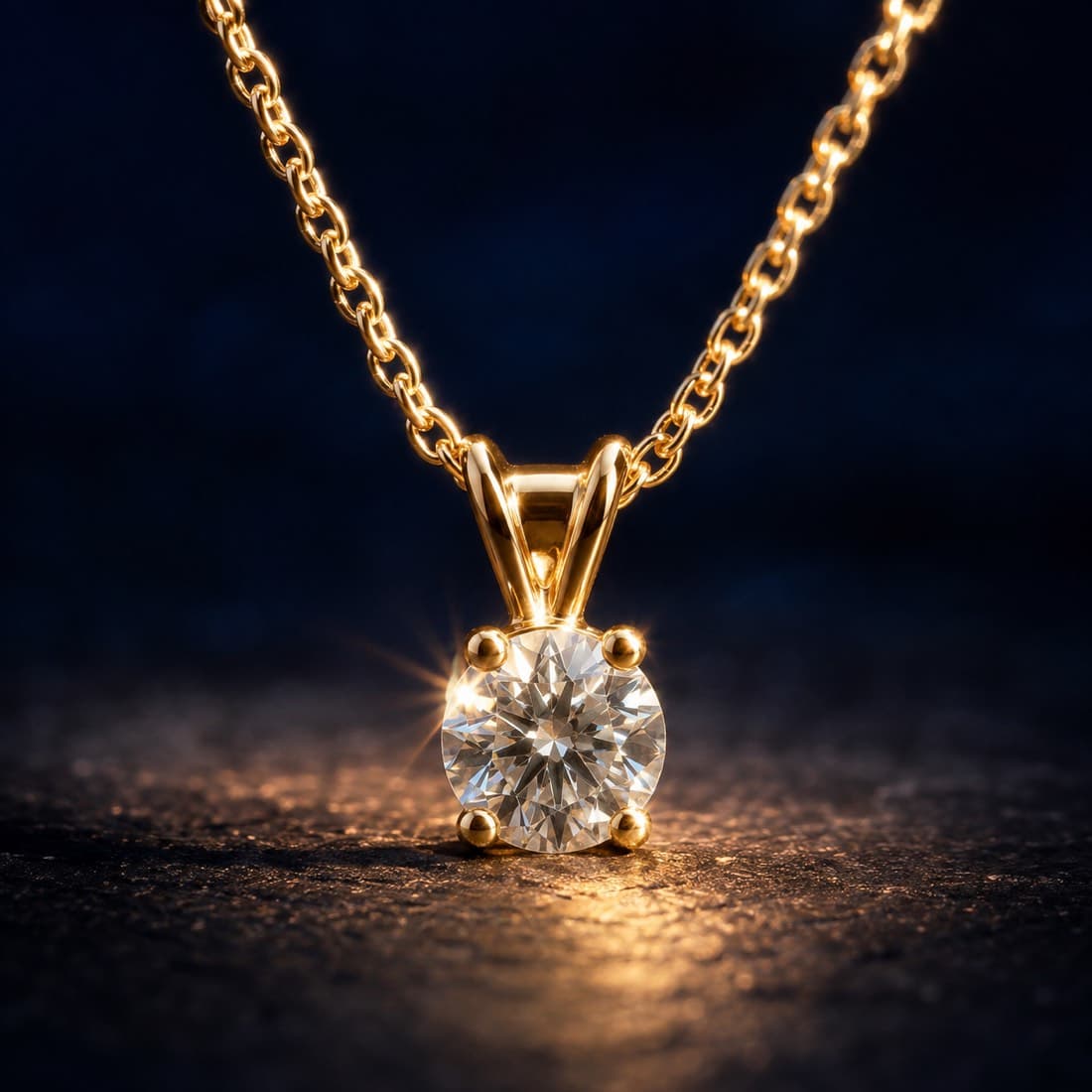
April
Diamond — carbon, Mohs 10, and the two stones people compare it with
- Mineralogy
- Diamond is pure carbon in a cubic lattice, Mohs 10, and the hardest natural material known. White sapphire is corundum, aluminium oxide, Mohs 9. White topaz is aluminium silicate fluoride hydroxide, Mohs 8 with one perfect cleavage plane. Three different minerals, three different behaviours.
- What the trade does to it
- Every diamond on this site is lab-grown and labelled Lab-created (synthetic) in the declaration block. Lab-grown diamond is diamond — the same crystal, the same hardness — made in a reactor rather than found in kimberlite. It is never described here as natural, and never described as a substitute.
- Wearing it
- Diamond and white sapphire are the two stones on this site rated for daily wear. White topaz is not — its cleavage makes it far less forgiving than its Mohs 8 suggests.
May
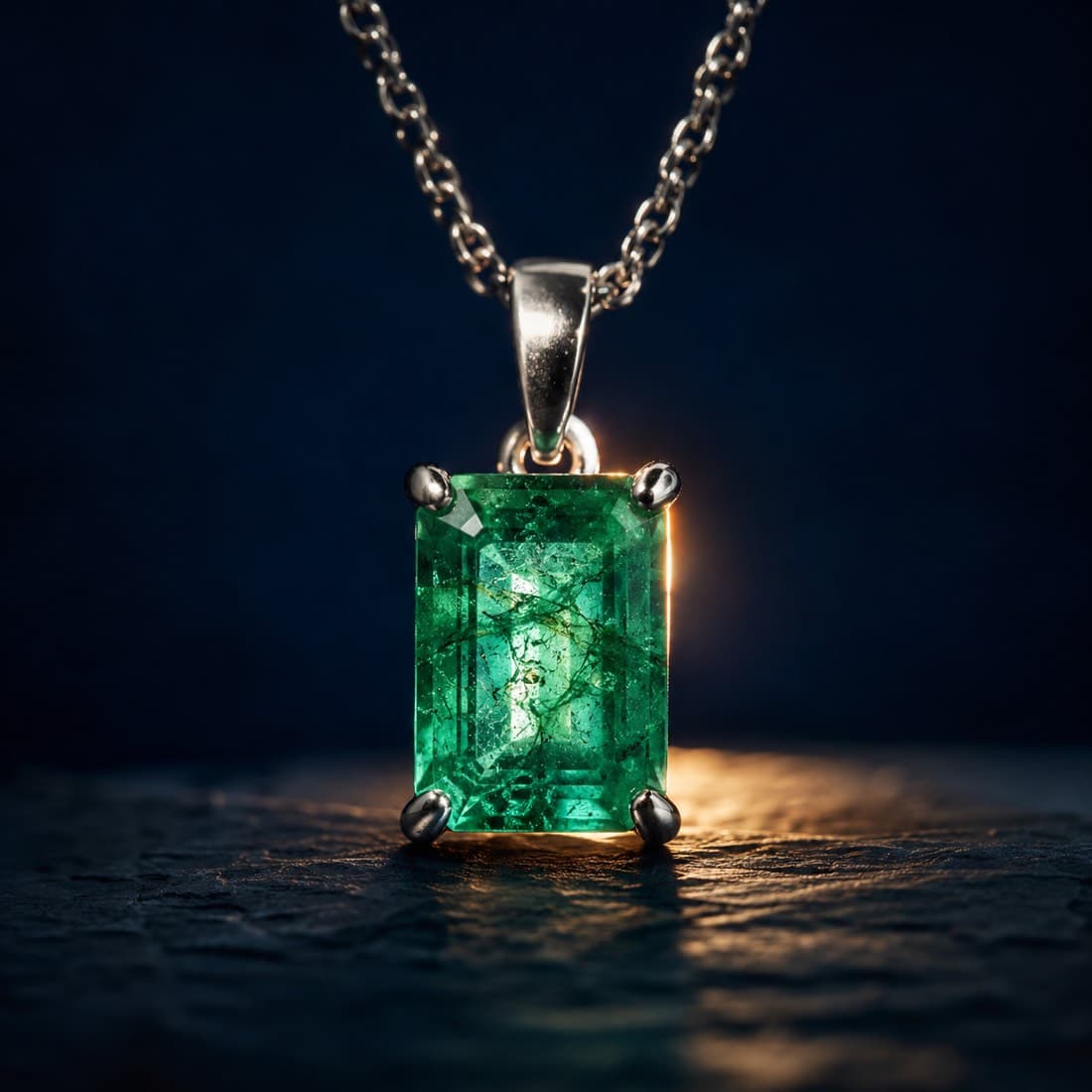
Emerald — green beryl, and the reason the trade talks about jardin
- Mineralogy
- Emerald is beryl coloured green by chromium or vanadium. Mohs 7.5 to 8 — but the number is misleading. Emerald grows with a dense network of internal fractures and inclusions, called the jardin, which make it far more fragile than its hardness implies.
- What the trade does to it
- Fracture filling with oil or resin is near-universal in emerald and has been for centuries. It reduces the visibility of surface-reaching fractures. It is not permanent, it can be disturbed by heat and solvents, and it rules out ultrasonic and steam cleaning. Every natural emerald here is declared fracture-filled.
- Wearing it
- Occasional wear only, regardless of the hardness figure. A knock on the girdle can extend an existing fracture.
June
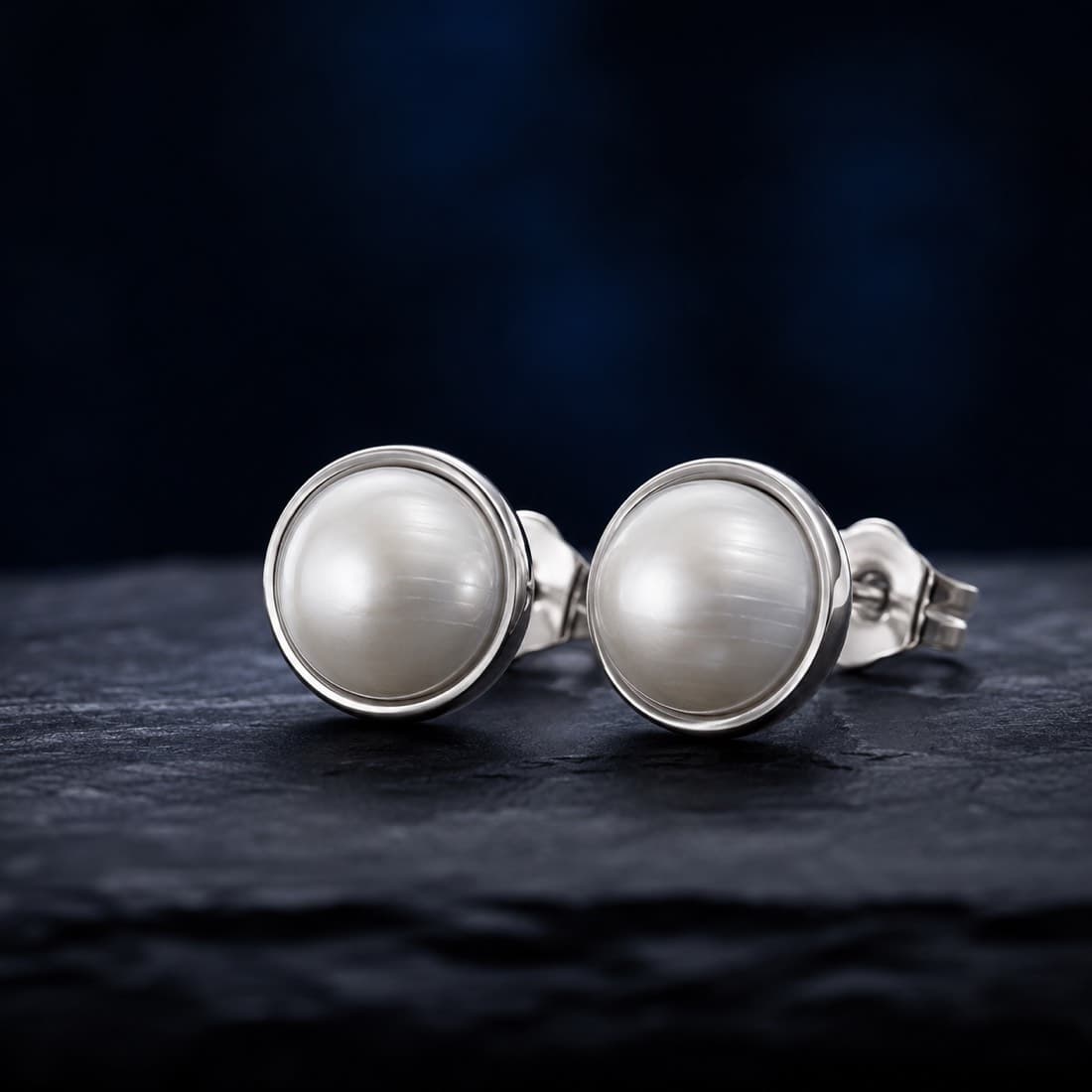
Pearl and moonstone — the two softest materials on this site
- Mineralogy
- Pearl is not a mineral in the usual sense: it is aragonite platelets bound in conchiolin, laid down by a mollusc, Mohs 2.5 to 4.5. Moonstone is orthoclase feldspar with albite lamellae; the blue sheen, adularescence, is light scattering off those layers. Mohs 6 with two directions of perfect cleavage.
- What the trade does to it
- Every pearl on this site is cultured — grown inside a living mollusc around a deliberate implant — and is labelled Cultured, never natural and never imitation. Moonstone here is untreated. Neither material tolerates ultrasonic cleaning.
- Wearing it
- Delicate. Both materials are softer than ordinary household dust, which is largely quartz at Mohs 7. Special occasions only.
July
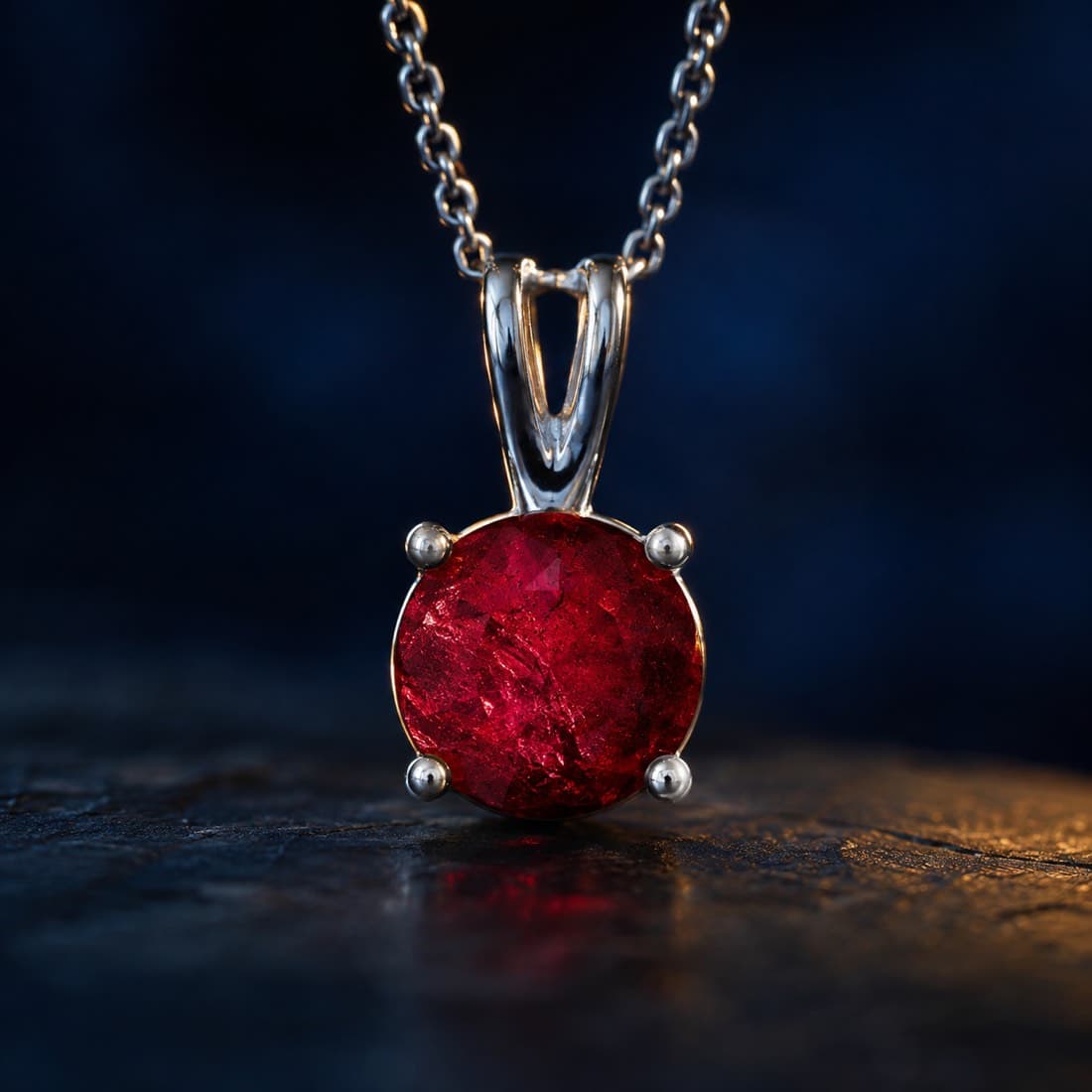
Ruby — red corundum, Mohs 9
- Mineralogy
- Ruby is corundum, aluminium oxide, coloured red by chromium. Any other colour of gem corundum is called sapphire; the line between a pale ruby and a pink sapphire is a trade convention, not a mineralogical one. Mohs 9, no cleavage.
- What the trade does to it
- Heating is standard and long-established for ruby. Lead-glass filling is also widespread in low-grade material and produces a stone that looks far better than it is; this site does not stock glass-filled ruby. Natural rubies here are declared heated, and lab-created rubies are labelled as such.
- Wearing it
- Mohs 9 with no cleavage. One of the few stones here rated for daily wear.
August
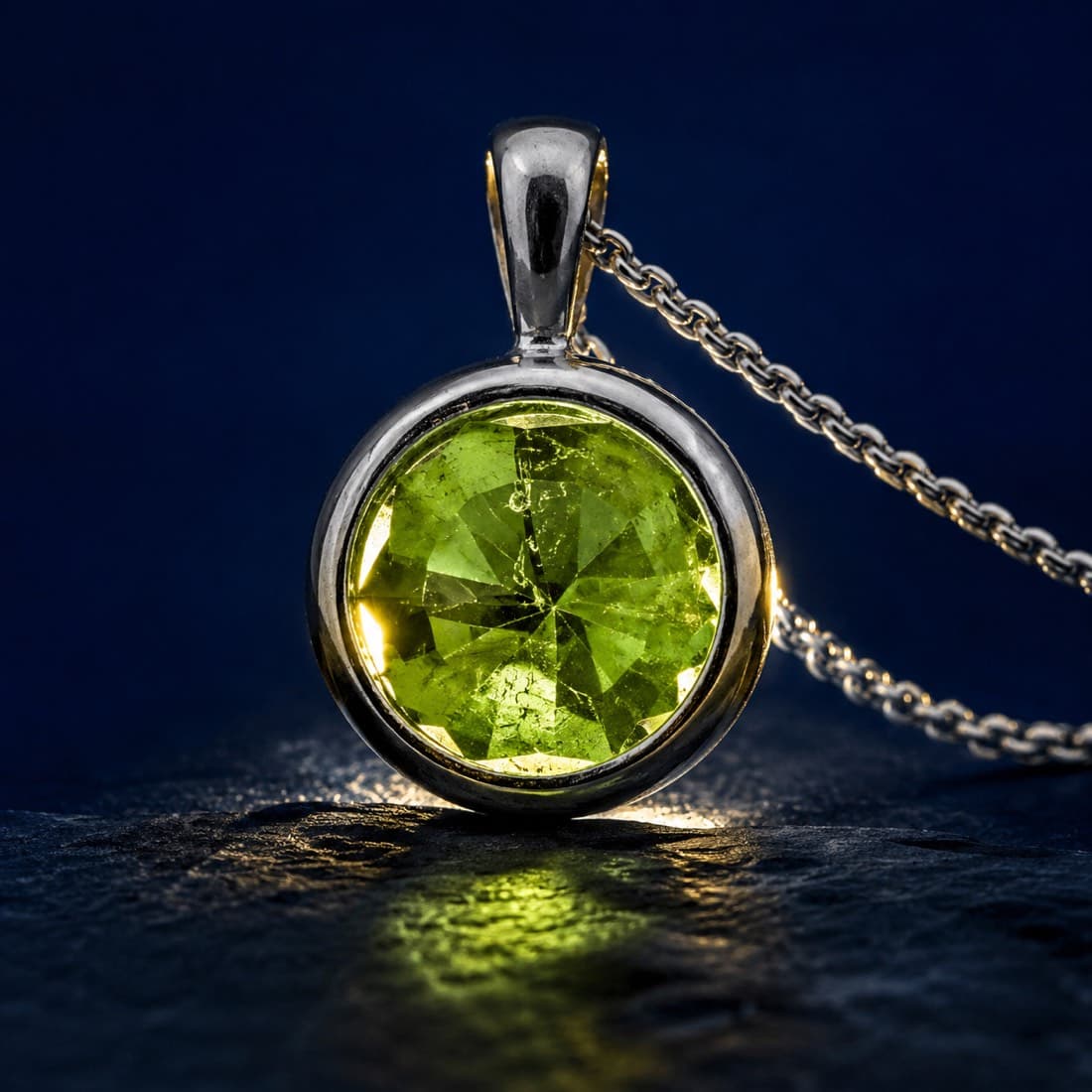
Peridot — gem olivine, one colour only
- Mineralogy
- Peridot is gem-quality forsterite olivine, magnesium iron silicate. Its green comes from iron in the structure itself rather than from a trace impurity, which is why peridot is only ever green. Mohs 6.5 to 7. Some peridot on the market arrived on meteorites.
- What the trade does to it
- Peridot is one of the very few coloured stones that is essentially never treated — there is no useful treatment for it. Every peridot here is declared untreated.
- Wearing it
- Mohs 6.5 to 7 and sensitive to acids and rapid temperature change. Occasional wear; keep it away from steam.
September
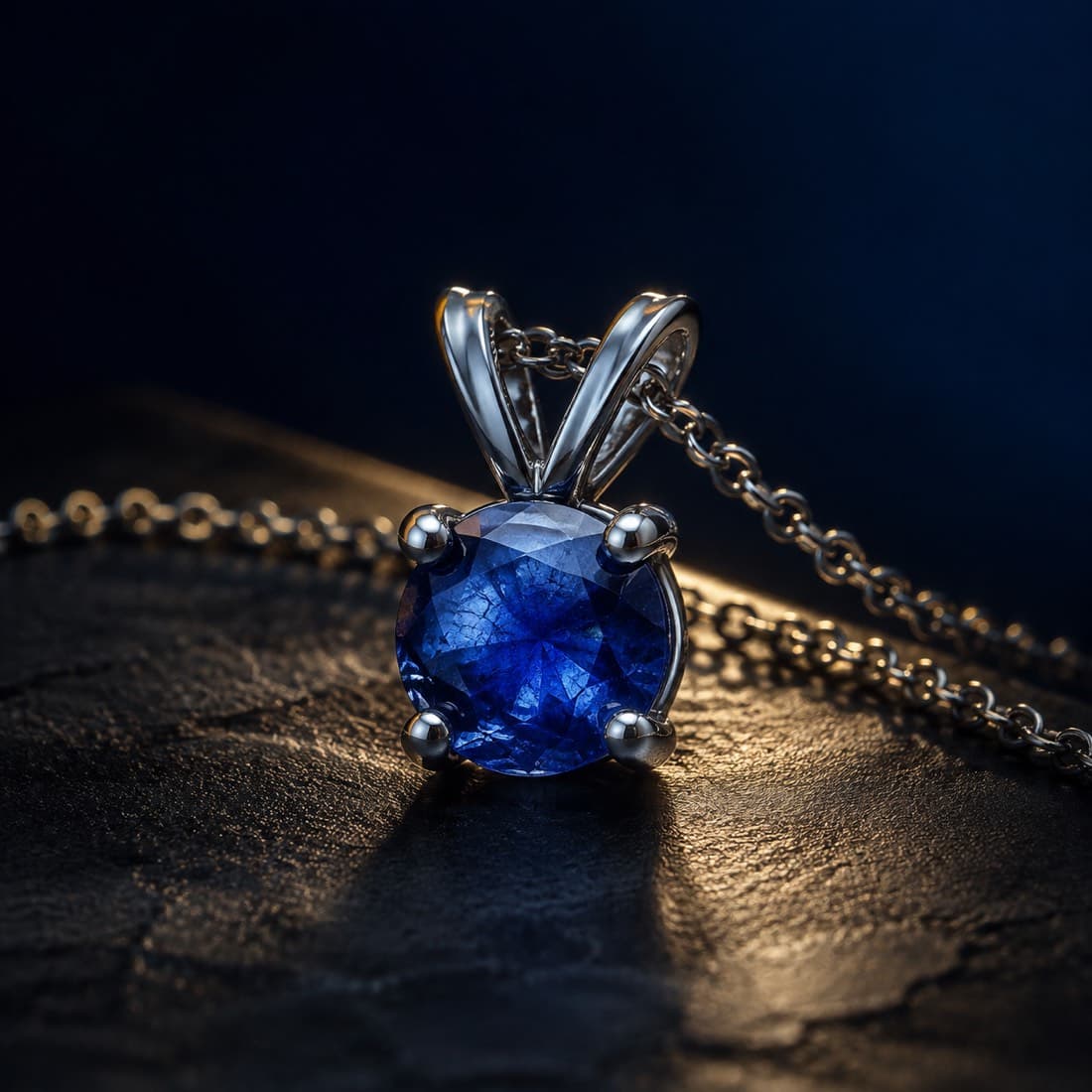
Sapphire — corundum in every colour but red
- Mineralogy
- Sapphire is corundum, the same mineral as ruby, coloured blue by iron and titanium together. It also occurs colourless, yellow, pink, green and orange. Mohs 9, no cleavage, and the second hardest natural material after diamond.
- What the trade does to it
- The large majority of blue sapphire on the market has been heated, often above 1600°C, to improve colour and clarity. Beryllium diffusion is also used in the trade to force colour into the surface layer; this site does not stock diffusion-treated sapphire. Natural sapphires here are declared heated.
- Wearing it
- Mohs 9, no cleavage. Rated for daily wear, and the most forgiving stone in this catalogue.
October
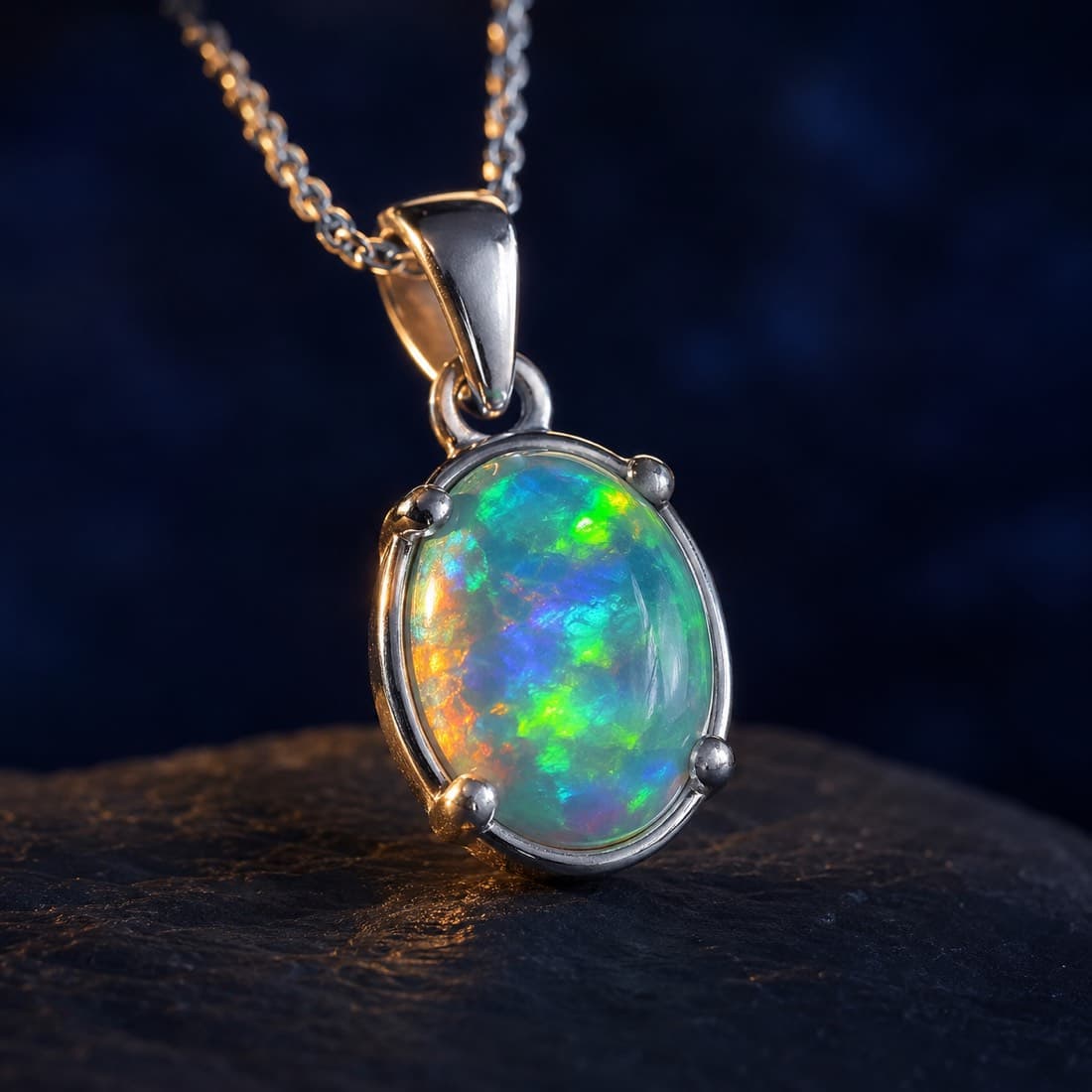
Opal and tourmaline — one holds water, the other holds a charge
- Mineralogy
- Opal is hydrated amorphous silica containing 3 to 21 per cent water — not a crystal at all. Its play of colour is diffraction from a regular array of silica spheres. Mohs 5.5 to 6.5. Tourmaline is a complex borosilicate group, Mohs 7 to 7.5, and is pyroelectric: it develops a static charge when heated, which is why loose tourmaline attracts dust.
- What the trade does to it
- Opal here is untreated. Tourmaline is commonly heated to lighten overly dark material, and every tourmaline on this site is declared heated. Opal doublets and triplets are assembled stones; this site sells solid opal only and says so on the piece.
- Wearing it
- Opal is delicate and its water content makes it sensitive to dry heat and sudden temperature change. Tourmaline is occasional wear.
November
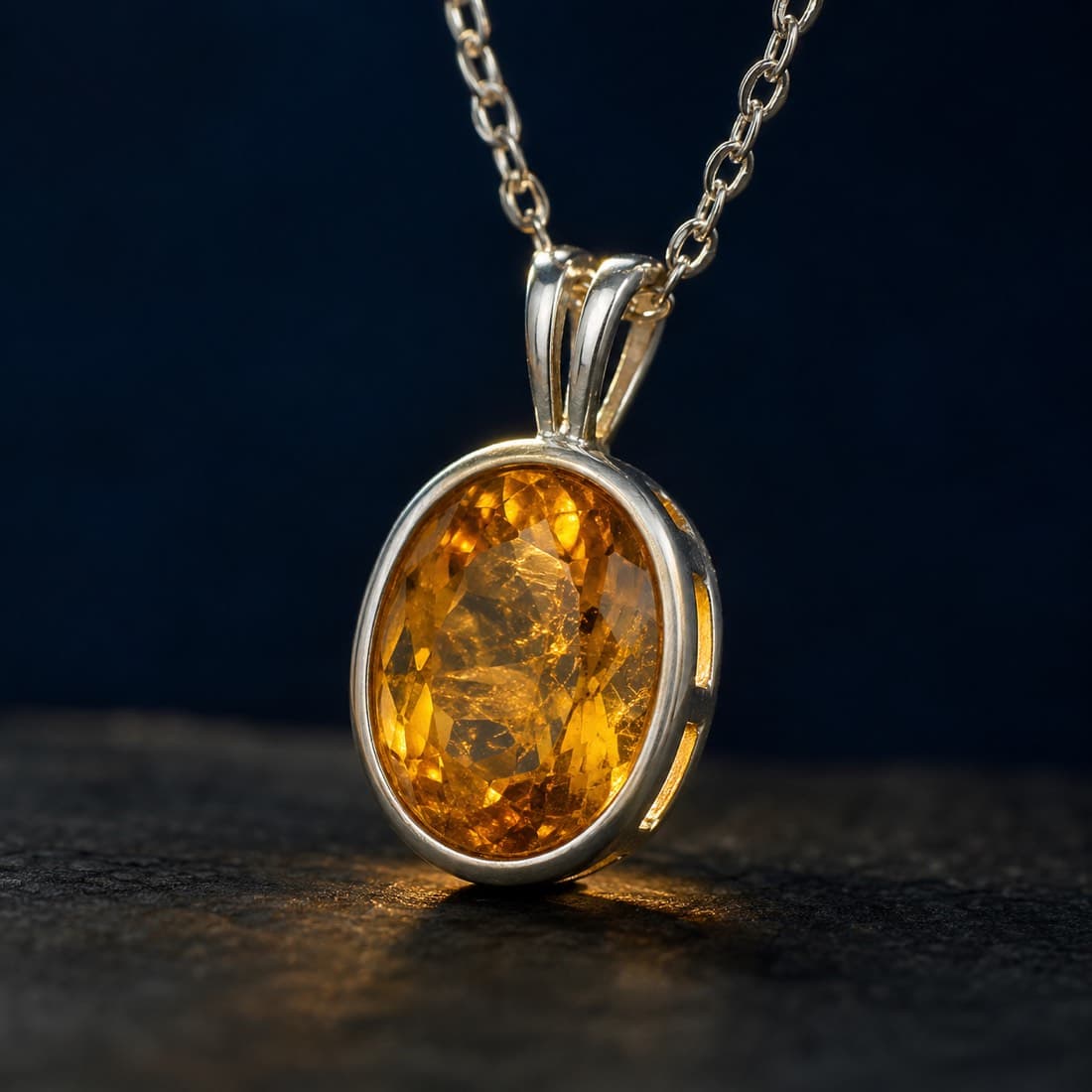
Citrine — usually amethyst that has been through a kiln
- Mineralogy
- Citrine is the yellow to orange variety of quartz, Mohs 7. Topaz is aluminium silicate fluoride hydroxide, Mohs 8, with one perfect basal cleavage that makes it far more fragile in wear than its hardness number suggests.
- What the trade does to it
- Most citrine sold anywhere in the world is heat-treated amethyst. Natural untreated citrine of good colour is genuinely uncommon. This site states it on every citrine piece rather than leaving it implied. Blue topaz is almost always irradiated and then heated; near-colourless topaz is the starting material. Both steps are declared here, separately.
- Wearing it
- Citrine at Mohs 7 is occasional wear. Topaz at Mohs 8 is still occasional wear, because of the cleavage — hardness and toughness are not the same property.
December
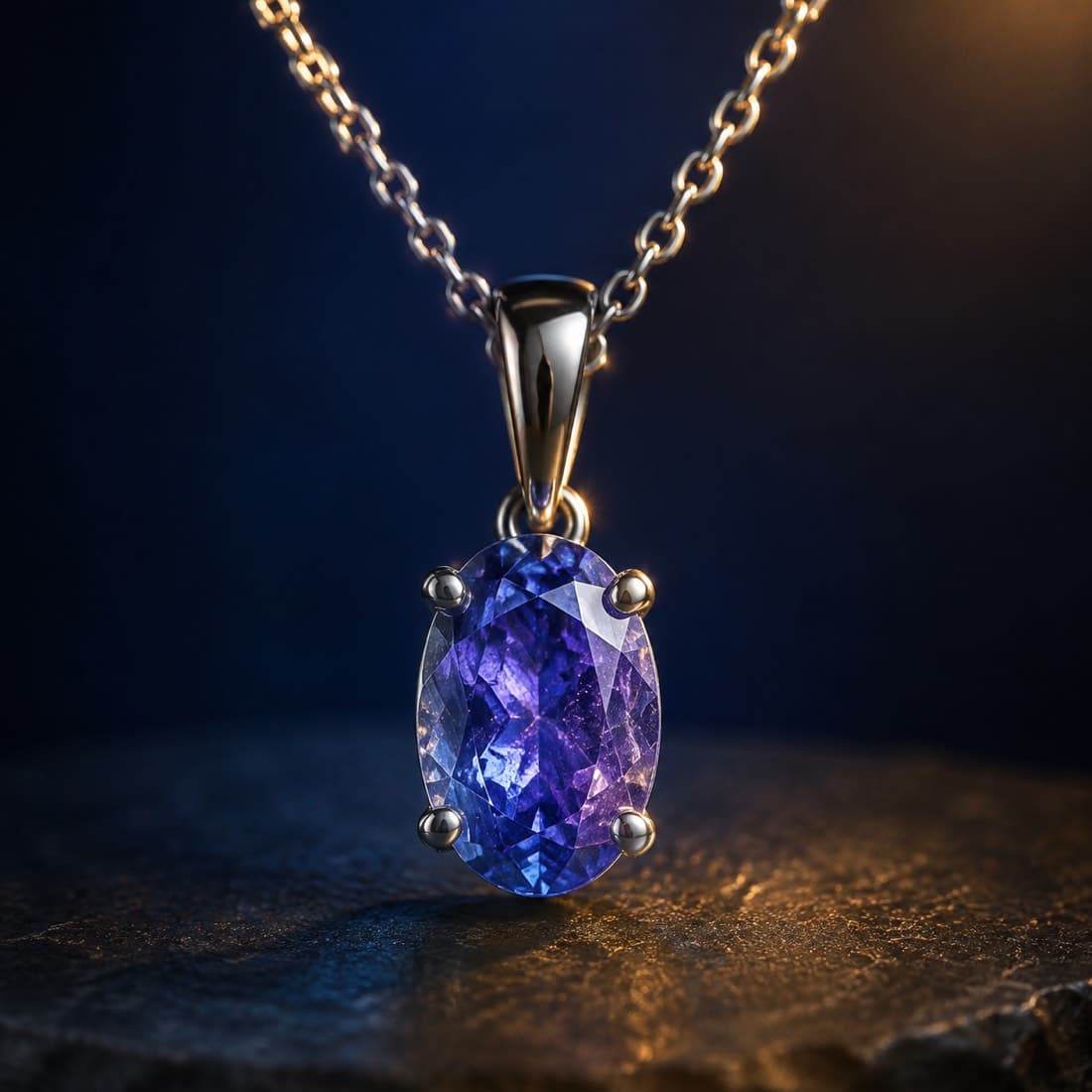
Tanzanite, turquoise and zircon — three very different materials
- Mineralogy
- Tanzanite is blue zoisite, calcium aluminium silicate, found in one small area of northern Tanzania and nowhere else. Mohs 6 to 7 with one direction of perfect cleavage. Turquoise is a hydrated copper aluminium phosphate, Mohs 5 to 6 and porous. Zircon is zirconium silicate, Mohs 7.5, with a dispersion close to diamond's — and it is a natural mineral, entirely unrelated to cubic zirconia, which is a manufactured imitation.
- What the trade does to it
- Almost all tanzanite is heated to turn a brownish crystal blue; it is declared here. Most commercial turquoise is stabilised with resin so it can be cut and worn at all — declared here on the piece, along with what it means for cleaning. Blue zircon is heated.
- Wearing it
- All three are occasional wear at best. Turquoise is porous and must never meet solvents or an ultrasonic tank.